- Description
- 3rd Party Lab Testing
Description
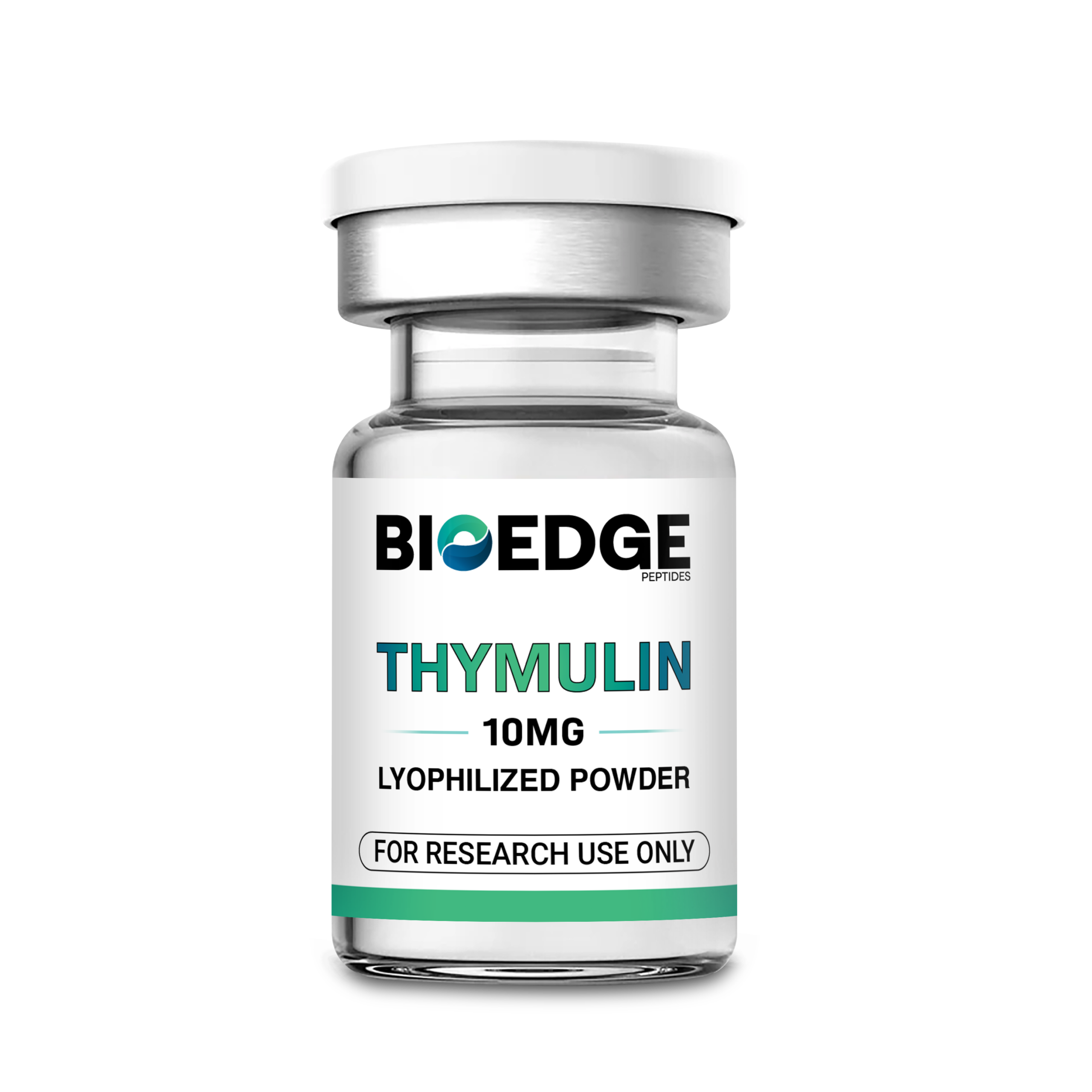
Thymulin
Lyophilized Powder | Third-Party Tested | USA-Manufactured
In Stock | Free Shipping on Orders Over $150
Product Specifications
- Peptide Name: Thymulin
- Molecular Formula: C33H54N12O15
- Molecular Weight: 858.864 g/mol
- CAS Number: 63958-90-7
- Sequence: Pyr-Ala-Lys-Ser-Gln-Gly-Gly-Ser-Asn
- Purity: ≥99% (HPLC), verify on batch-specific COA
- Form: Lyophilized peptide powder
- Storage: -20°C recommended for long-term preservation (sealed, dry, protected from light)
- Shelf Life: Up to 12 months when stored sealed and dry; see Handling & Storage for stability guidance
Compound Overview
Thymulin is a defined nonapeptide (9–amino acid) compound described in published literature as a zinc-dependent peptide complex in experimental systems.
Structural characterization commonly references a specific amino acid sequence (Pyr-Ala-Lys-Ser-Gln-Gly-Gly-Ser-Asn) with metal coordination influencing
conformational behavior in biochemical models.
In preclinical research contexts, Thymulin is discussed in relation to thymus-derived peptide signaling frameworks and neuroendocrine-immune axis mapping.
Experimental publications also describe the compound’s use in mechanistic studies focused on cytokine signaling behavior, peptide–receptor interaction screening,
and laboratory evaluations of zinc-associated activity under controlled conditions.
All data referenced on this page is derived from published preclinical animal and in vitro studies. No human clinical trials have established approved uses for Thymulin as a research compound.
Published Preclinical Research
Published literature describes Thymulin as a characterized thymus-associated nonapeptide used in controlled experimental systems to investigate peptide signaling,
zinc-dependent activity, and inflammation mediator pathways in preclinical models.
- Peptide structure and zinc-dependent activity in biochemical characterization workflows
- Neuroendocrine-immune axis mapping in thymus-associated signaling models
- Inflammation mediator pathway studies evaluating cytokine and chemokine signaling behavior in preclinical systems
- Mechanistic exploration of thymulin analogs and structure–function relationships in laboratory models
All data referenced on this page is derived from published preclinical animal and in vitro studies. No human clinical trials have established approved uses for Thymulin.
Research Applications
- Peptide identity confirmation and analytical characterization workflows
- Zinc-dependent peptide activity studies in controlled biochemical assays
- In vitro screening of cytokine and chemokine signaling pathways
- Neuroendocrine-immune axis research models (signal mapping and mediator profiling)
- Comparative studies of thymus-associated peptides and analog structure–function relationships
Physical Specifications
- Vial Size: 3 mL sterile vial
- Fill: 10mg
- Appearance: White to off-white lyophilized powder
- Reconstitution Volume: Researcher-determined under validated laboratory protocols
- Post-Reconstitution Storage: 2–8°C, use within 30 days
- Solubility: Water-based laboratory solvents (researcher-validated)
Compare to Related Compounds
Thymosin Alpha-1
- Primary structure: Thymulin is a nonapeptide; Thymosin Alpha-1 is a longer peptide (commonly referenced as a 28–amino acid fragment in research materials).
- Biochemical framing: Thymulin is frequently described in literature as zinc-dependent; Thymosin Alpha-1 is generally discussed as a thymic peptide fragment without a zinc-complex definition.
- Research positioning: Both appear in thymus-associated signaling discussions, but are used in distinct structure–function and pathway mapping designs based on peptide length and characterization frameworks.
TB-500 (Thymosin Beta-4 Fragment)
- Primary structure: Thymulin is a 9–amino acid peptide; TB-500 is a longer peptide fragment derived from thymosin beta-4, used in separate characterization contexts.
- Mechanistic emphasis in literature: Thymulin discussions frequently center on zinc-associated activity and thymus-linked signaling models; TB-500 literature focuses on different peptide biology frameworks due to distinct sequence composition and classification.
- Experimental use cases: Comparative designs commonly separate these compounds by peptide family, length, and the assay systems used for pathway mapping and mediator profiling.
Handling & Storage
Lyophilized Stability:
When stored sealed in a dry environment protected from light, lyophilized peptide material may maintain chemical stability for up to 12 months at controlled room temperature. For maximum long-term preservation, storage at -20°C is recommended.
Post-Reconstitution Stability:
Following reconstitution under sterile laboratory conditions, the solution may maintain stability for up to 30 days when stored at 2–8°C. Minimize repeated freeze–thaw cycles and protect from light to preserve peptide integrity.
Handling:
Allow vial to equilibrate to room temperature before opening to prevent moisture condensation. Use sterile technique throughout preparation.
Certificate of Analysis & Third-Party Testing
Every batch of BioEdge Thymulin undergoes independent third-party testing prior to release. Testing is performed by ISO-accredited laboratories with results available on each product page.
- Batch-level identity verification and purity confirmation are documented per release lot.
- COA access is provided on-page to support institutional documentation and reproducibility requirements.
To view testing results, scroll to the 3rd Party Testing section located below the product images.
Why Researchers Choose BioEdge
- Third-party testing standards applied to each batch prior to release
- USA-manufactured supply chain and documented lot traceability
- Research-first documentation workflow supporting repeatability and lab recordkeeping
- Controlled handling and sealed packaging intended to protect material integrity during shipment and storage
Frequently Asked Questions
What is Thymulin?
Thymulin is a characterized nonapeptide described in published preclinical literature and supplied for in vitro laboratory research applications, including peptide characterization and experimental signaling pathway studies.
What is the CAS number for Thymulin?
63958-90-7
How should Thymulin be stored?
Store Thymulin sealed, dry, and protected from light. For maximum long-term preservation, storage at -20°C is recommended. After reconstitution, store at 2–8°C and use within 30 days.
Is Thymulin third-party tested?
Yes. Every batch of BioEdge Thymulin undergoes independent third-party testing prior to release, with results available on the product page.
Where can I access the COA for Thymulin?
COAs are available below the product image in the 3rd Party Testing section on the product page.
Is Thymulin FDA approved?
No. Thymulin is not FDA approved.
Do you ship Thymulin within the USA?
Yes. BioEdge Research Labs is a USA based supplier with same day domestic shipping on orders placed before 3pm Eastern. Free shipping on orders over $150.
Can I get bulk pricing on Thymulin?
Yes. Contact BioEdge Research Labs directly for institutional and bulk research pricing.
Published References
1. Dardenne M, Saadé NE, Safieh-Garabedian B. “Role of Thymulin or Its Analogue as a New Analgesic Molecule.” Annals of the New York Academy of Sciences. 2006;1088:153–163. Link
2. Savino W, Arzt E, Dardenne M. “Immunoneuroendocrine Connectivity: The Paradigm of the Thymic–Hypothalamic–Pituitary Axis.” Peptides. 2004;25(2):177–190. Link
3. Haddad JJ, Saadé NE, Safieh-Garabedian B. “Thymulin: An Emerging Anti-Inflammatory Molecule.” Current Medicinal Chemistry – Anti-Inflammatory & Anti-Allergy Agents. 2005;4(3):333–338. Link
4. Saadé NE, Atweh SF, Jabbur SJ, Dardenne M, Safieh-Garabedian B. “Thymulin and Neuroimmune Interactions in Experimental Models.” Journal of Neuroimmunology. 2003;136(1–2):72–80. Link
RESEARCH USE ONLY Disclaimer
RESEARCH USE ONLY. Thymulin is sold exclusively for in vitro laboratory and research purposes. This product is not intended for human or animal consumption, clinical use, or therapeutic application. It has not been evaluated by the Food and Drug Administration (FDA) for safety, efficacy, or any medical purpose. Purchase and use of this product confirms the buyer will use it only in qualified research settings, in compliance with all applicable federal, state, and local regulations. BioEdge Research Labs is a chemical supplier, not a compounding pharmacy or clinical facility as defined under 503A of the Federal Food, Drug, and Cosmetic Act. BioEdge Research Labs makes no claims regarding therapeutic, diagnostic, or clinical applications of this compound.